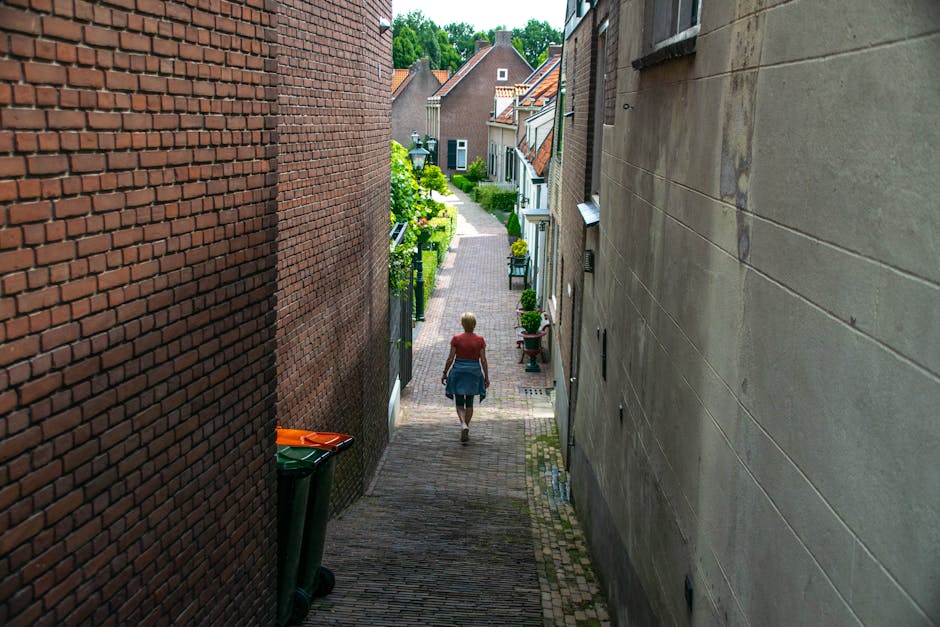
Hanger Lane to Park Royal: narrow roads and access advice
If you are planning a move, delivery, or furniture drop between Hanger Lane and Park Royal, the road layout can make a bigger difference than people expect. This short stretch of west London may look straightforward on a map, but narrow side roads, awkward turns, loading pressure, and busy junctions can quickly turn a simple job into a bit of a faff. That is exactly why Hanger Lane to Park Royal: narrow roads and access advice matters.
The good news? With a little planning, the route becomes much easier to handle. In this guide, we will walk through the practical access issues, what usually slows vans down, how to prepare your property and your items, and when it makes sense to choose a service like man and van support in Park Royal or a more tailored moving option. You will also find a checklist, a comparison table, and a few real-world tips that save time on the day. Simple, useful, no drama.
Table of Contents
- Why Hanger Lane to Park Royal: narrow roads and access advice Matters
- How Hanger Lane to Park Royal: narrow roads and access advice Works
- Key Benefits and Practical Advantages
- Who This Is For and When It Makes Sense
- Step-by-Step Guidance
- Expert Tips for Better Results
- Common Mistakes to Avoid
- Tools, Resources and Recommendations
- Law, Compliance, Standards, or Best Practice
- Options, Methods, or Comparison Table
- Case Study or Real-World Example
- Practical Checklist
- Conclusion
- Frequently Asked Questions
Why Hanger Lane to Park Royal: narrow roads and access advice Matters
Access is not just a background detail on a move. It changes the whole shape of the job. In this part of west London, the main roads are often busy, but the real headache usually starts when you leave the main route and turn into tighter residential roads, business yards, service entrances, or shared access points. A van may fit, but not comfortably. And when a vehicle fits only just, every parked car, low branch, or sharp bend becomes part of the plan.
People often underestimate how much time is lost by small access problems. A driver may need to reverse carefully, unload in stages, or park further away than expected. That means more lifting, more walking, and more chances for damage if items are not packed properly. For something fragile or heavy, that matters a lot. If you are moving furniture, a piano, or a full flat, a few minutes of access planning can save a very long afternoon.
To be fair, this is not unique to Hanger Lane or Park Royal. But the local mix of industrial units, flats, older streets, and busier roads means the issue shows up more often here. That is why good movers ask questions early: Where is the entrance? Can a van stop near the door? Is there a lift? Is there a narrow gate? Are there time restrictions? The answers shape the route and the loading plan.
If you want a broader picture of the services that can support this kind of move, the services overview is a helpful place to start.
How Hanger Lane to Park Royal: narrow roads and access advice Works
The basic idea is simple: you match the vehicle, route, and handling method to the access conditions. In practice, that means thinking through the move before the van arrives. A narrow road is not a problem by itself. It becomes a problem when the team has not prepared for it.
Here is how a sensible approach usually works:
- Assess the access points. Look at the entrance, stairwell, gate width, driveway, kerb height, and any obstructions.
- Choose the right vehicle. A smaller removal van or man-with-a-van setup may be easier than a larger truck where roads are tight.
- Plan the load order. Put awkward or heavy items near the door so they come out first if parking is limited.
- Check timing. Busy periods can matter as much as road width. A quiet hour can make a narrow road feel twice as manageable.
- Protect the property. Tight turns and short hallways increase the risk of knocks, so use blankets, wraps, and edge protection where needed.
One common local scenario: a customer on a side road near Hanger Lane thinks the van can pull right outside the flat. On the day, there is a delivery truck, a neighbour's car, and a corner that needs a wider swing than expected. The sensible response is not panic. It is to park safely, carry in a measured way, and use the shortest possible walking route. That is the sort of practical judgement that saves the day.
For jobs involving bulky furniture, it can help to read up on furniture removals in Park Royal and keep an eye on packing support too, especially if you are trying to fit everything into a single visit.
Key Benefits and Practical Advantages
Good access planning is not just about avoiding problems. It also makes the move faster, safer, and less stressful. The advantages are easy to feel on the day, especially when the weather is poor or the building access is a bit awkward.
- Less lifting distance: Shorter carries reduce fatigue and lower the risk of drops.
- Fewer delays: If the van can stop legally and sensibly, loading usually moves faster.
- Lower damage risk: Fewer turns, fewer tight squeezes, fewer accidental scrapes. Quite simply.
- Better use of time: When access is planned, the crew can focus on the move instead of improvising.
- More confidence: Knowing the route and the access plan takes a lot of stress out of the day.
There is also a practical financial angle. Efficient access often means the job takes less time and uses fewer resources. That does not mean every move becomes cheap, of course, but wasted time is usually expensive in one way or another. For anyone comparing options, it is worth looking at pricing and quotes early, because access details can affect what kind of vehicle or team is needed.
And let's face it, nobody wants to be standing by the kerb at 8:10 in the morning wondering whether the sofa will make that corner. Better to know before the kettle has even cooled.
Who This Is For and When It Makes Sense
This advice is useful for anyone moving between Hanger Lane and Park Royal, but it is especially valuable if your job includes one or more of the following:
- tight residential roads or limited on-street parking
- flats with stair access or narrow hallways
- office units with loading restrictions
- bulky furniture that needs careful handling
- same-day removals where there is little time for rework
- students moving in or out of shared accommodation
- short-notice deliveries or smaller partial moves
If that sounds familiar, a smaller vehicle or flexible loading plan may be the smarter choice. This is often where a removal van in Park Royal or a man with a van can suit the job better than a larger, less nimble alternative.
For flats in particular, access is often the real story, not the distance travelled. A second-floor walk-up with a narrow stairwell can be more demanding than a longer drive. That is why flat removals in Park Royal are usually best planned with the building layout in mind, not just the postcode.
Step-by-Step Guidance
If you want a move that feels calm rather than chaotic, work through the route and access plan in this order.
- Measure the awkward bits. Doorways, stair widths, lift size, gate openings, and hallway corners all matter.
- Check parking reality. Look at where the van can actually stop. Not where it would be nice to stop.
- Walk the route. If possible, follow the path from van to front door with your biggest item in mind.
- Identify pinch points. These are the turns, steps, and tight spaces that slow everything down.
- Decide what needs disassembly. Bed frames, table legs, and some shelving units are easier to move in pieces.
- Pack for access, not just storage. The first items out should be easy to grab and easy to carry.
- Set a backup plan. If the ideal parking spot is taken, know the next best option.
A practical tip: keep one bag or box for the things you will need first at the new place. Charger, keys, documents, snacks, a torch, maybe loo roll. Not glamorous, but very useful when you arrive and the last thing you want is digging through six boxes for the kettle lead.
If you are still in the packing stage, packing and boxes in Park Royal can help you shape the move around the access conditions, not the other way around. And if you are trying to reduce volume before moving day, a few ideas from these decluttering strategies can make a surprising difference.
Expert Tips for Better Results
Here is where the small details start to pay off. These are the things experienced movers tend to check without making a song and dance about it.
1. Treat narrow roads as logistics, not just navigation
It is tempting to think, "We only need to get from A to B." But access on arrival is often more important than the journey itself. A road may be drivable yet still awkward for loading. The real question is whether the van can stop, unload, and leave without blocking the flow of traffic or creating a risk.
2. Separate heavy and fragile items early
Heavy objects should not end up buried beneath lighter boxes. That sounds obvious, but it happens more often than people admit. If you have a piano, glass table, or oversized wardrobe, make sure the team knows about it. For delicate instruments, piano removals in Park Royal are best handled with specialist care, especially where access is tight.
3. Protect the route inside the building
Hallways, communal stairs, and door frames can take a battering if nobody plans ahead. A blanket over a corner or a wrap around a leg is a small thing, but it can prevent a regrettable scuff. If you are moving furniture, this matters even more. For a practical look at handling bigger pieces, see these tips for transporting your bed and mattress.
4. Build extra time into the schedule
A tight street, a loading bay that is already occupied, or a building lift that is slower than expected can all add minutes. Sometimes hours, in fairness. A bit of margin in the schedule helps you stay calm if the day does not go exactly to plan.
5. Think about lifting technique as much as route length
Access advice is not only about parking. It is about handling. On narrow routes, there is often more stop-start lifting, more turning, and more carrying around corners. If your move involves doing some of the lifting yourself, the guidance in personal heavy lifting advice and kinetic lifting principles can help you avoid a dodgy back and a grumpy rest of the week.
Common Mistakes to Avoid
Most access problems are avoidable. Not all, but most. The following mistakes come up again and again.
- Assuming the van will fit because a car does. A car and a removal van are not the same thing, and the turning circle is often the giveaway.
- Ignoring parking restrictions. Even temporary stopping can matter in busy areas, so check where unloading is actually realistic.
- Not mentioning stairs or lifts. If the team expects step-free access and finds three flights instead, the whole rhythm changes.
- Packing by room only. Room-based packing is tidy, but access-based packing is smarter for moving day.
- Leaving bulky items for last. That is how the sofa ends up blocking the hallway while everyone stands around pretending not to panic.
- Forgetting about weather. Rain, wet kerbs, and slippery steps make narrow access even slower.
One tiny but important point: do not leave the "awkward stuff" as a surprise. That surprise is never funny for the people carrying it. If you have anything unusually large, fragile, or difficult to manoeuvre, say so early.
Tools, Resources and Recommendations
You do not need a toolkit the size of a hardware shop, but a few simple items make access-heavy moves much easier.
- Tape measure: For checking doors, lifts, and furniture dimensions.
- Furniture blankets: Useful on tight corners and during staged loading.
- Ratchet straps or load restraints: Helpful for keeping items steady in transit.
- Labels and markers: Especially useful if boxes must be carried in a particular order.
- Gloves and sturdy footwear: Small thing, big difference when the pavement is wet or uneven.
On the planning side, a few pages on the same site are worth keeping in mind. If you need a fuller move, house removals in Park Royal can suit larger domestic jobs, while office removals in Park Royal may be better for workplace access and time-sensitive loading. For smaller or quicker jobs, same-day removals in Park Royal can be the right fit if timing is tight.
If you are comparing providers, it is also sensible to look at removal services in Park Royal and removal companies in Park Royal so you can judge how flexible they are with access, loading, and property type. A provider that asks good questions up front is usually worth paying attention to.
Law, Compliance, Standards, or Best Practice
For most people, the practical side of compliance comes down to safe parking, sensible lifting, and protecting people and property. In the UK, removal work should be approached with proper care for health and safety, even when the job seems small. That includes not overloading people, keeping walkways as clear as possible, and using reasonable precautions for sharp edges, fragile items, and awkward lifts.
Best practice also means being honest about access limits. If a van cannot safely fit down a road, it should not be forced. If a loading point is not suitable, it is better to use a different stopping place than to create a hazard. The same goes for building access: if a lift is too small, or a stairwell is too tight, the team should adapt the method rather than push through and hope for the best. Hope is not a strategy, as they say.
There are also trust issues around service quality and handling. A reputable mover will usually have clear terms, sensible insurance expectations, and a straightforward complaints route if something goes wrong. Those pages matter more than people realise. If you are checking the details, insurance and safety, terms and conditions, and the complaints procedure are all worth reading before booking. It is not exciting reading, granted, but it is sensible.
For people who value transparency more broadly, the company's about us and health and safety policy pages can give a better sense of how carefully jobs are handled. That sort of detail is reassuring for a reason.
Options, Methods, or Comparison Table
Different moves call for different approaches. The right choice depends on how narrow the roads are, what you are moving, and how much help you want on the day.
| Option | Best for | Strengths | Trade-offs |
|---|---|---|---|
| Man and van | Small to medium moves, quick access jobs | Flexible, nimble, usually easier on narrow roads | Less suitable for very large loads |
| Removal van | Furniture-heavy domestic moves | More capacity, better for planned loading | May need more space for parking and turning |
| Full house removals | Larger family relocations | More structured, more hands, more efficient for bigger jobs | Needs clearer access planning and timing |
| Flat removals | Stair access, lifts, shared buildings | Built around building access challenges | Can be slower if access is very tight |
| Storage-first approach | Moves with delays, staging, or excess furniture | Reduces pressure on moving day | Extra coordination needed |
If your route between Hanger Lane and Park Royal includes a tricky entrance or a road that gets congested at the wrong time, the smaller and more flexible option often wins. If you have a full property's worth of furniture, then a more structured service may be the better fit. The answer is not always "bigger is better." Often it is the opposite.
When in doubt, a storage option in Park Royal can also ease pressure if access problems mean you cannot move everything in one go.
Case Study or Real-World Example
Here is a realistic example from the kind of move people often underestimate.
A small two-bedroom flat near Hanger Lane needs to be cleared and moved into a unit in Park Royal. The route looks short. On paper, it should be quick. But the origin building has a narrow staircase, street parking is tight by midday, and one sofa is too bulky for a casual carry. The move is still absolutely doable, but only if the plan changes a little.
The solution is straightforward:
- the van arrives early enough to secure the safest nearby stopping point
- the heavier items are taken first while everyone still has energy
- the sofa is wrapped and moved with two people rather than dragged through the stairwell
- the bed frame is dismantled before loading
- the boxes are stacked so the first unload at Park Royal is smooth
Nothing dramatic happened. That is the point. The job felt calm because the access issue was handled before it became a problem. You can almost hear the difference, honestly: less shouting, fewer thuds, no frantic rearranging on the pavement. Just steady progress.
For a move like this, pairing route planning with practical guidance from smart packing solutions and stress-free moving advice makes the day much easier to manage.
Practical Checklist
Use this checklist before move day. It keeps the job grounded in the real world, where kerbs, corners, and keys matter.
- Measure the largest items and compare them with doorways and stair turns
- Confirm where the van can stop safely and legally
- Note any access codes, buzzers, or loading instructions
- Tell the mover about stairs, lifts, or shared entrances
- Separate fragile, heavy, and awkward items
- Disassemble beds, tables, or shelving if needed
- Keep essential items in one clearly labelled bag
- Protect floors, corners, and furniture where possible
- Build in a little extra time for traffic or access delays
- Have a backup parking or unloading plan
Expert summary: In narrow-road moves, the safest and fastest plan is usually the one that reduces uncertainty. Measure early, park sensibly, carry less distance, and keep your loading order simple. That small bit of prep makes a bigger difference than most people expect.
Conclusion
Moving between Hanger Lane and Park Royal is often less about the distance and more about the access. Narrow roads, awkward parking, tight stairwells, and busy loading areas can all slow things down, but none of them have to derail the day. With the right preparation, the move becomes manageable, predictable, and far less stressful.
The key is to think ahead in practical terms. Measure the space. Check the stopping point. Match the vehicle to the route. Pack with access in mind. And if the job looks fiddly, choose support that is built for that kind of movement rather than hoping it will somehow sort itself out. It rarely does.
If you are planning a local move, a same-day delivery, or a furniture transfer with tight access, taking a few minutes now to plan properly can save you a lot of effort later. That is the honest version. And it usually pays off.
Get a free quote today and see how much you can save.
Frequently Asked Questions
How do I know if a van can get down my road near Hanger Lane or Park Royal?
The safest approach is to measure the narrowest points, check for parked cars or bends, and compare that with the size of the vehicle you plan to use. If you are unsure, ask the mover to assess access before the day.
What should I tell a removals team about access before moving day?
Tell them about stairs, lifts, gate widths, access codes, parking restrictions, loading bays, and any bulky items. The more precise you are, the easier it is to plan the job properly.
Is a man and van better than a large removals truck for narrow roads?
Often, yes. A smaller vehicle is usually easier to position on tight roads and can be less disruptive when parking is limited. For bigger house moves, though, a larger service may still be the better choice if access allows.
What if there is nowhere to park close to the property?
Then the team may need to use the nearest safe stopping point and carry items a little further. That is not ideal, but it is workable if it is planned in advance. It helps to know this before the van arrives.
Should I dismantle furniture before a move in a tight area?
If a bed frame, table, or wardrobe is likely to snag on corners or stair rails, yes, dismantling can make the move much smoother. It also lowers the chance of damage during turns and lifts.
How do narrow roads affect moving costs or quotes?
They can affect the time, vehicle choice, and handling requirements, which may influence the quote. That is why access details are important when requesting pricing. It is better to be clear early than to guess.
What are the biggest risks with narrow access moves?
The main risks are property damage, vehicle delays, blocked loading, and strain from extra carrying. These risks can be reduced with planning, sensible packing, and the right vehicle size.
Can I still move on the same day if access is tricky?
Yes, if the team knows the access conditions and the load is manageable. Same-day removals can work well for smaller jobs, but they rely on quick decisions and a realistic plan.
Do flats in Park Royal need special access planning?
They often do, especially if there are stairs, lifts, communal entrances, or limited nearby parking. Even a short move can become slower if the building layout is not checked first.
What is the best way to protect furniture on narrow routes?
Use blankets, wraps, and careful handling around corners and door frames. It is also smart to load furniture so that the largest and most delicate pieces are easy to access first.
Where should I start if I want help with a local move?
Start by looking at the service that fits your move size and access needs. For smaller, flexible jobs, a man-and-van style service is often a good starting point. For larger homes or offices, broader removal support may make more sense.
What if my move includes bulky items like a sofa or piano?
Say so early. Bulky items need a different handling plan, especially if the road or building access is tight. Specialist services are often the safest option for heavier or more delicate pieces.